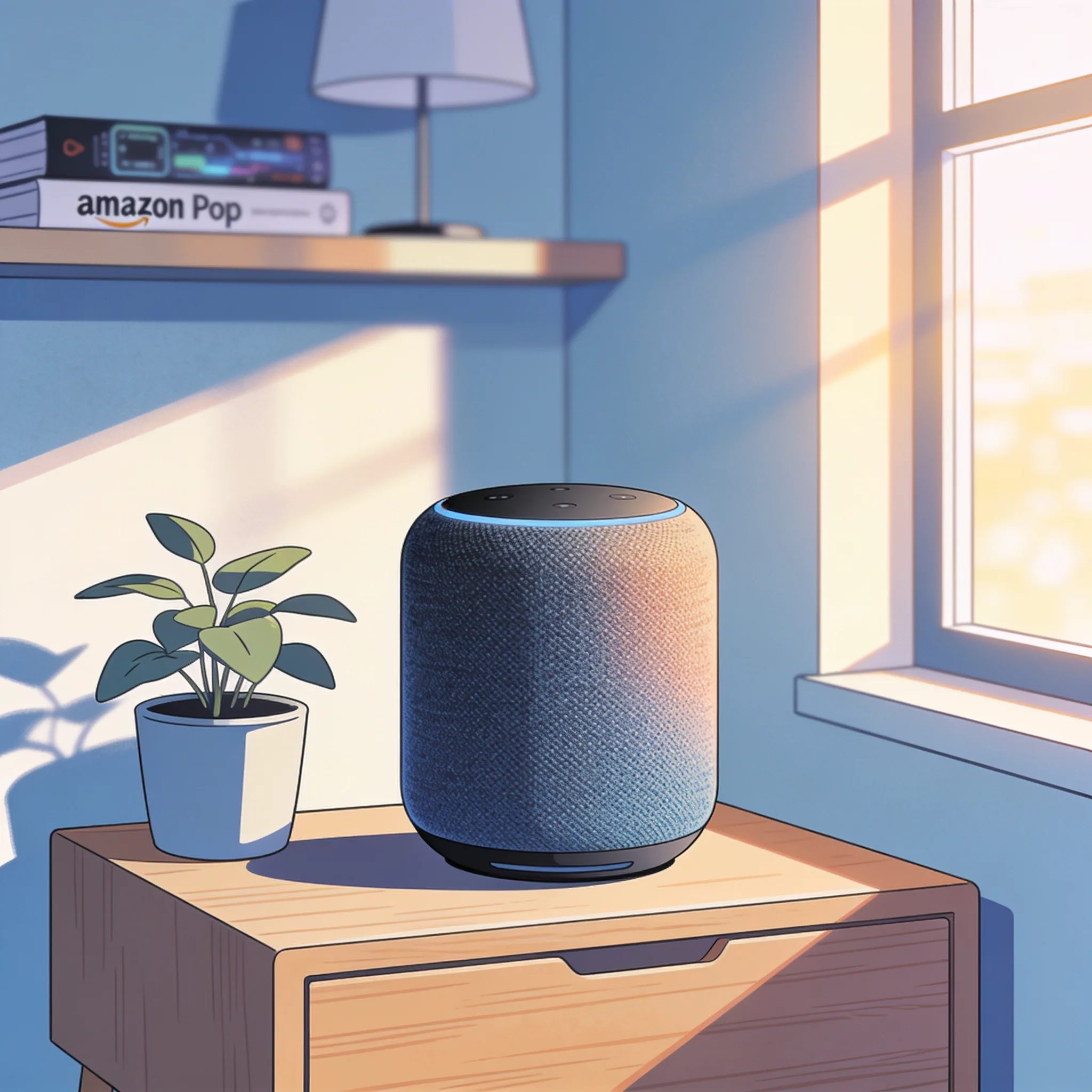
The Amazon Echo Pop positions itself as an accessible entry point into the smart home ecosystem, combining the Alexa assistant with a diminutive physical footprint. Launched in 2023, this device prioritizes convenience and space efficiency over high-end audio performance.
Physical Design and Dimensions
At roughly 9.9 centimeters tall, 8.3 centimeters wide, and 9.1 centimeters deep, the Echo Pop fits easily on nightstands, kitchen counters, or desks. Weighing approximately 199 grams, its lightweight construction allows for flexible placement. However, the unit requires a constant power connection via a 15-watt adapter, as it does not include an internal battery. This limits mobility compared to portable Bluetooth speakers.
Voice Assistant and Smart Home Integration
Alexa remains the core functionality of the Echo Pop. Users can issue voice commands to check weather forecasts, set alarms, create reminders, request news updates, or play content from streaming services including Amazon Music, Spotify, Apple Music, and Deezer. Bluetooth pairing enables direct audio playback from smartphones.
For smart home automation, the Echo Pop supports Wi-Fi, Bluetooth Low Energy, and the Matter standard. This allows control over compatible lights, plugs, and other connected devices through voice or the Alexa app. A physical microphone mute button and LED indicators provide transparency regarding when the device is listening. Users can manage voice history through privacy settings within the app.
Audio Performance Limitations
The single 1.95-inch front-firing driver delivers sound suitable for podcasts, audiobooks, and background music in small rooms. It does not produce deep bass or high volume levels comparable to dedicated speakers. While the audio quality suffices for daily tasks, listeners seeking rich musical detail may find it lacking.
Notably, the Echo Pop lacks a built-in Zigbee hub. This absence means it cannot directly pair with certain smart home sensors that rely on that protocol, requiring alternative solutions for comprehensive automation setups.
Installation and Connectivity
Setup involves connecting the device to power, downloading the Alexa app on Android or iOS, and following on-screen instructions to join a 2.4 GHz or 5 GHz Wi-Fi network. No auxiliary input exists for wired connections. The dual-band Wi-Fi support ensures stable internet access for cloud-based features.
What it means
The Echo Pop targets consumers who want to experiment with voice assistants without committing to larger, more expensive models. Its compact size makes it practical for bedrooms or home offices where space is at a premium. The inclusion of Matter support future-proofs compatibility with newer smart home standards, even if the lack of a Zigbee hub restricts some advanced integrations.
Users should weigh whether their primary need is voice control versus music quality. Those prioritizing audio fidelity might prefer the Echo Dot 5th generation or standalone Bluetooth speakers instead. The absence of a battery also means the device must stay near an outlet, reducing flexibility for temporary use cases.
Would you choose a compact smart speaker for voice commands, or do you prioritize audio quality in your home setup?