Building a custom mini PC presents significantly more hurdles than assembling a standard desktop computer, according to recent reporting on the subject. While the concept of creating a compact machine appeals to enthusiasts seeking performance in a small package, the reality involves navigating restricted component compatibility, elevated costs, and intricate installation procedures.
Component Limitations and Pricing
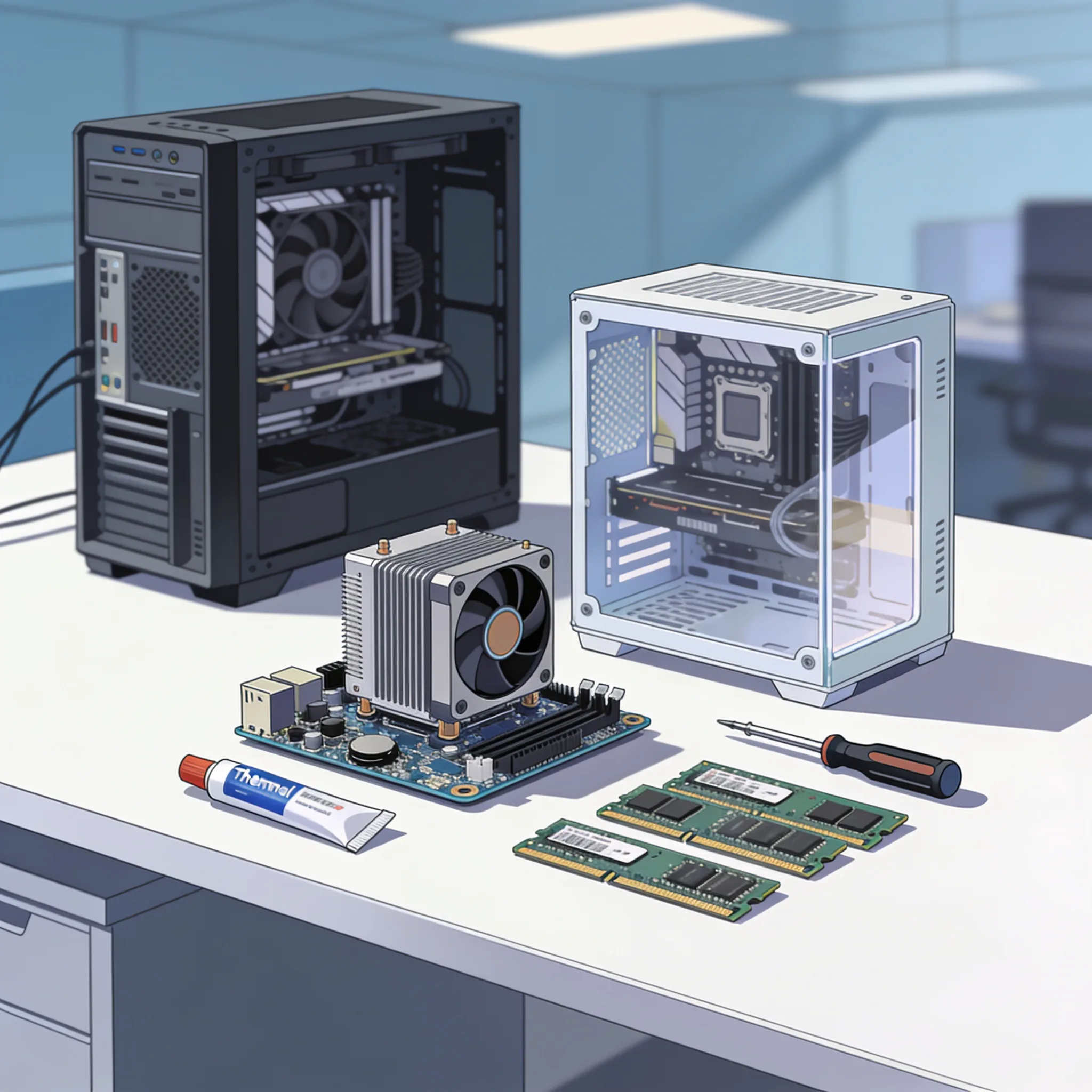
The foundation of any mini PC build lies in selecting an appropriate case, typically designed for Mini-ITX or microATX motherboards. Although these enclosures appear diminutive compared to full-size towers, they do not necessarily offer cost savings. Many mainstream commercial mini computers utilize system-on-a-chip architectures where memory is soldered directly to the motherboard, a configuration difficult to replicate in custom builds. When sourcing individual parts for a DIY approach, builders face a market where small form factor power supplies, motherboards, CPU coolers, and graphics cards carry price premiums over their larger counterparts.
Airflow management becomes another critical constraint. The reduced internal volume leaves minimal room for components to dissipate heat effectively. This issue intensifies when attempting to install a discrete GPU rather than relying on integrated graphics solutions found in APUs. Builders must carefully verify physical dimensions against official specifications or use compatibility tools to ensure parts fit within the designated enclosure.
Assembly Complexity
Physical construction of a mini PC demands greater precision than standard ATX builds. Unlike larger systems where components can generally be installed in various sequences, mini PC assemblies require a specific order of operations dictated by clearance limitations. The tight packing of internals means that installing one component before another could render subsequent steps impossible without disassembly.
While some cases provide surprising interior capacity relative to their exterior footprint, the margin for error remains slim. Enthusiasts accustomed to the flexibility of mid-tower designs will find the lack of wiggle room in SFF (small form factor) projects particularly demanding. The necessity for pre-planning every purchase and installation step adds time and complexity to what might otherwise be a straightforward project.
What it means
For individuals considering a custom mini PC build, the primary takeaway is that convenience does not come at a lower price point. Those who value space efficiency must accept higher expenses for specialized hardware and dedicate additional time to planning and execution. The trade-off involves sacrificing the ease of standard assembly for a more compact footprint.
Builders should anticipate needing to research component compatibility extensively before purchasing anything. The risk of acquiring incompatible parts is higher due to the strict dimensional requirements of small cases. Additionally, thermal management concerns mean that high-performance tasks may require careful consideration of cooling solutions to prevent overheating in confined spaces.
Uncertainty remains regarding whether future manufacturing trends will reduce the cost disparity between standard and small form factor components. Until then, the decision to pursue a mini PC build rests on whether the space savings justify the increased effort and expense.
Would you attempt to build your own mini PC despite the added complexity and cost, or would you prefer buying a pre-assembled unit?