Electric vehicle battery demand continues to grow despite leveling sales figures, yet production remains heavily reliant on imported materials. China controls approximately three-quarters of the graphite anode supply chain and 97% of synthetic graphite anode production according to Benchmark Mineral Intelligence data.
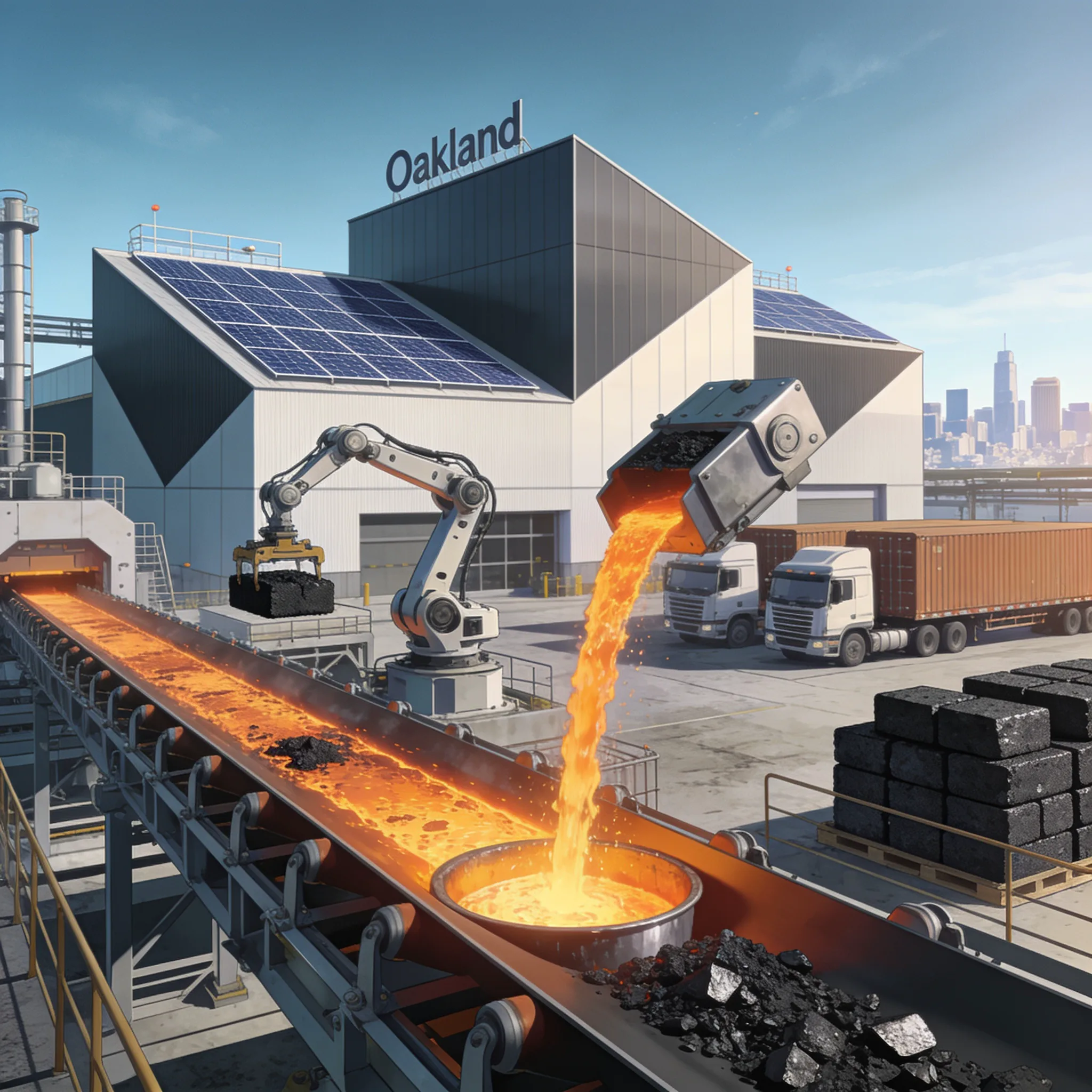
Molten Industries, a five-year-old startup founded by Stanford PhDs Caleb Boyd and Kevin Bush, has started operating a demonstration plant in Oakland designed to prove its technology works at scale. The facility aims to produce graphite that achieves cost parity with Chinese imports once U.S. tariffs are applied.
Caleb Boyd, co-founder and chief technology officer, stated the plant will produce about 300 metric tons of graphite annually. This output supports roughly 300 megawatt-hours of batteries, enough for approximately 4,300 electric vehicles. Most production will go to undisclosed customers testing the material in their battery cells.
The company's process uses electrical resistive heating to pass electricity through material, splitting methane from natural gas into pure carbon and hydrogen. Boyd described the system as similar to a massive toaster. Molten claims this method uses three times less electricity than existing techniques while running on abundant U.S. natural gas.
What it means
This development could reduce American dependence on foreign-controlled critical minerals for electric vehicle manufacturing. If successful, the technology offers a path toward domestic production that matches international pricing without relying on subsidies or protectionist measures alone.
The practical impact depends on whether future facilities can replicate the Oakland model at larger scales. Current output serves only a fraction of the U.S. battery market, but the company plans to expand by replicating the same template across multiple sites.
Uncertainty remains around commercial viability beyond the demonstration phase. While the chemistry is sound, scaling production and maintaining quality standards at industrial levels requires further validation from battery manufacturers who have not yet publicly confirmed long-term commitments.
Would you trust domestically produced battery components over established Chinese suppliers if prices were equal?