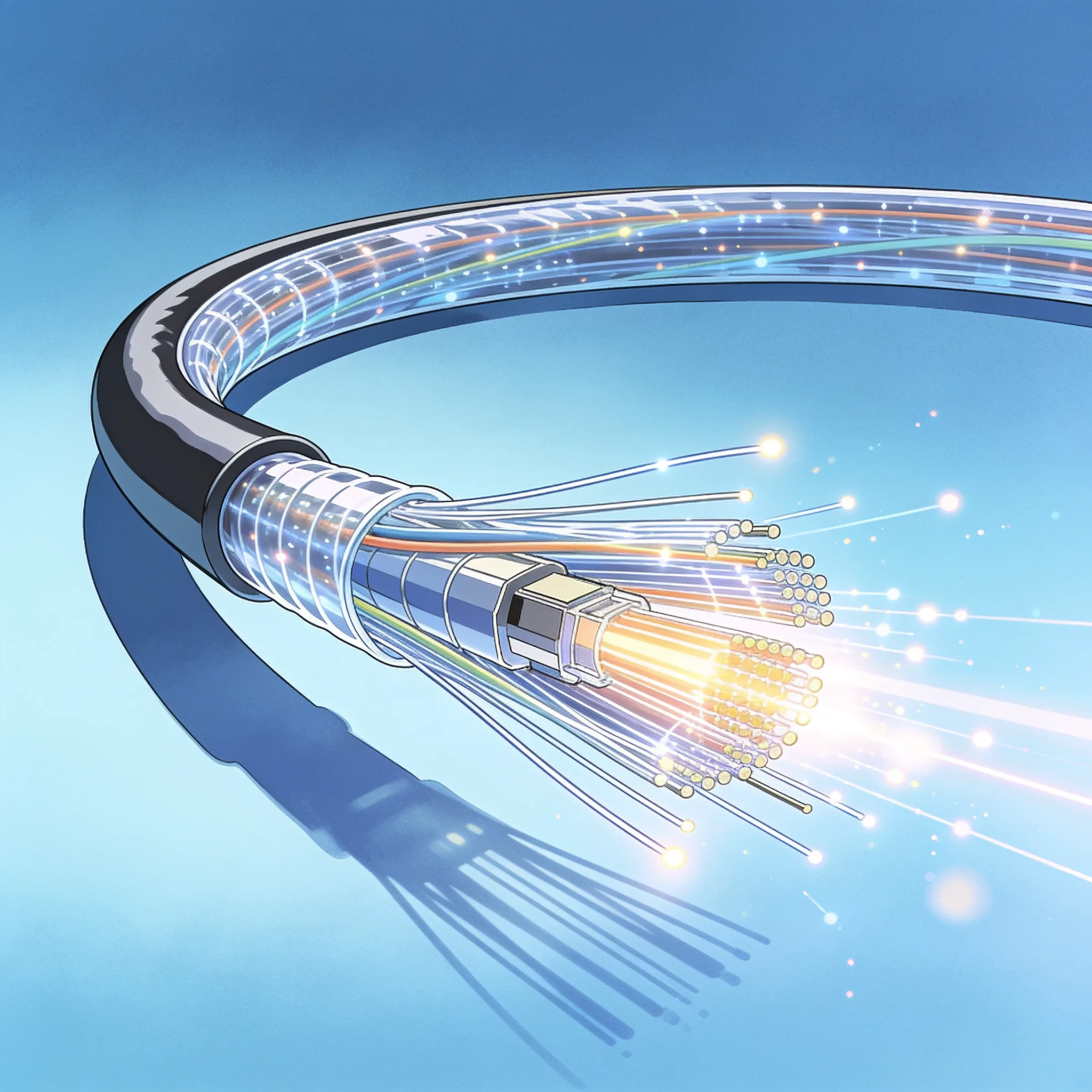
Fiber optic cables can span neighborhoods or multiple continents, but signal loss eventually occurs due to absorption and scattering within the glass core. A new analysis published by Engadget on November 21, 2026, outlines how this attenuation works and what factors determine maximum cable length.
How Fiber Carries Data Over Distance
Fiber-optic cables use total internal reflection to transmit light through glass strands. Unlike copper Ethernet cables that have a maximum recommended length of 100 meters, fiber can carry data over several kilometers before signal breakdown begins. The glass core's refractive index ensures light reflects back into the core rather than escaping at shallow angles.
Single-Mode vs Multi-Mode Differences
Single-mode fiber allows one beam of light to travel through it simultaneously, while multi-mode fiber permits multiple light pulses called modes. These pulses take slightly different paths within the strand, causing modal dispersion where they arrive at different times. Single-mode fiber carries signals over longer distances but requires more expensive equipment. Multi-mode fiber has wider cores for easier optical alignment and is preferred for shorter runs.
Continental-Scale Systems Use Amplifiers
The longest fiber optic cable run in the world is the 2Africa cable system with landing points across Africa, Europe, and Asia. The previous record holder SEA-ME-WE 3 connected portions of Europe, Northern Africa, the Middle East, Asia, and Australia before being decommissioned in 2024. For continental-scale systems, optical amplifiers installed along the seabed boost the optical signal. Multiplexing then allows multiple data streams to travel simultaneously over a single strand.
What it means
Most users will never encounter fiber length limitations in typical home networks. Even multi-mode fiber covers hundreds of meters without issue. The primary concern for domestic installations involves bends that are too tight, which cause light leakage from the core. Internet service providers advertising fiber connections offer faster speeds compared to legacy DSL connections using copper telephone lines.
For consumers choosing between connection types, understanding these physical constraints helps explain why fiber remains superior for long-distance data transmission. However, the technology still requires specialized equipment and maintenance when deployed at scale.
Would you prefer fiber internet despite higher infrastructure costs, or do you find current copper-based connections sufficient for your needs?